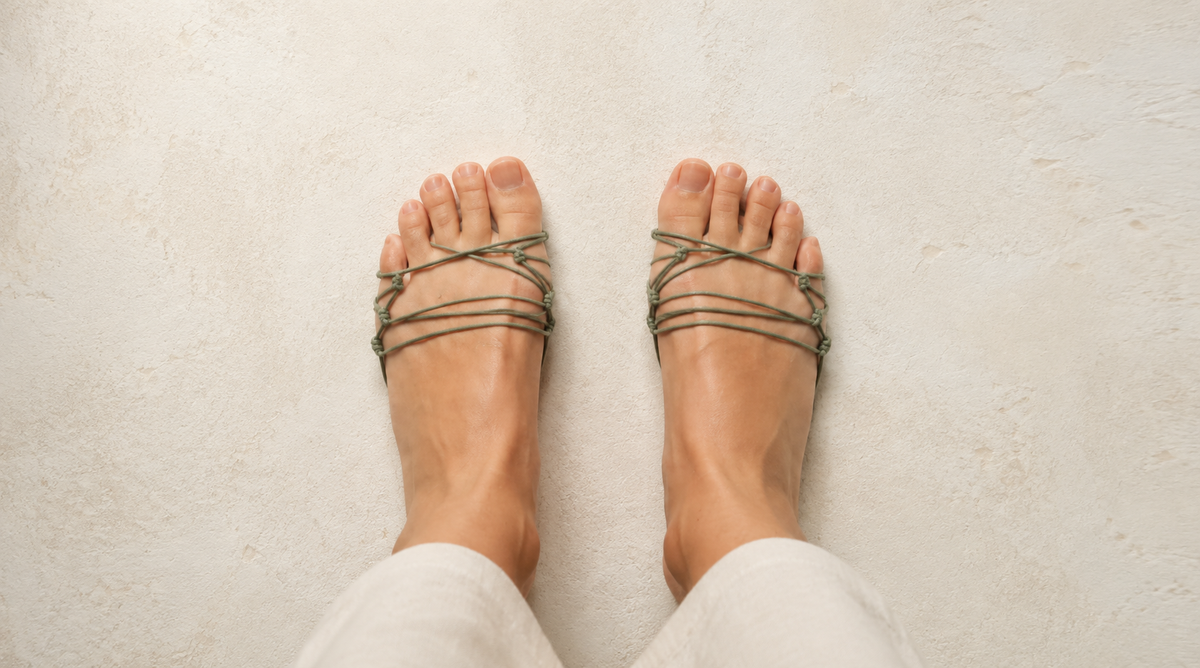
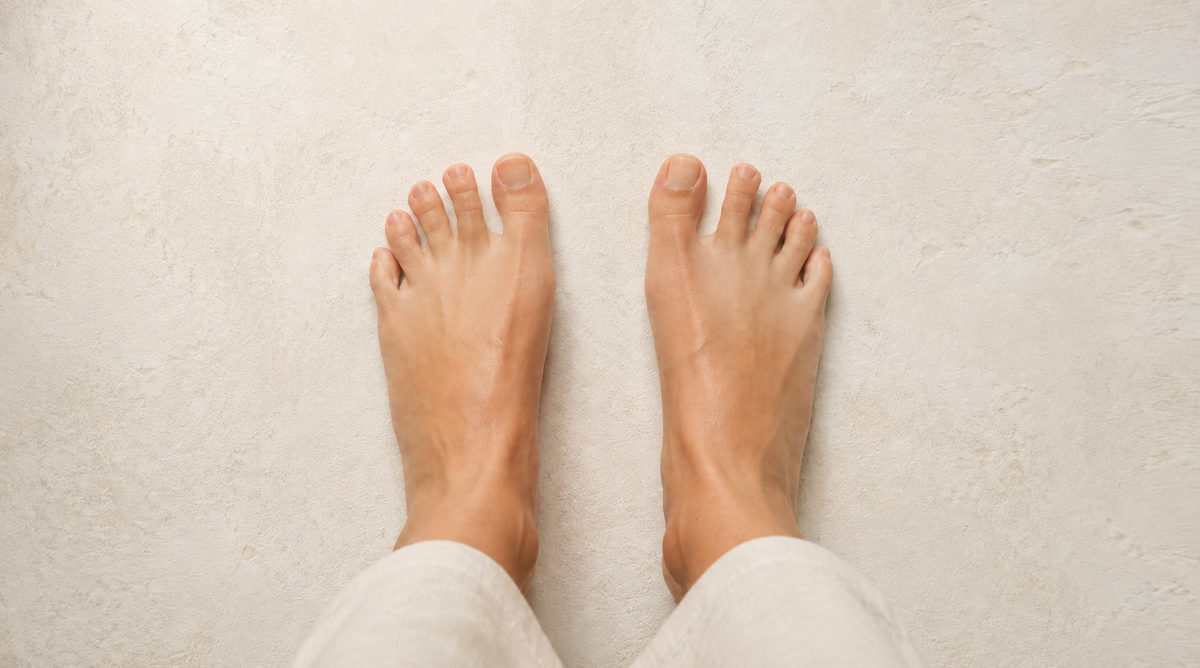
Every step should feel free, just as your body was designed to move.
But modern footwear has changed that natural way of walking, almost without us realizing it.

What is barefoot?

Barefoot: walk as nature intended
The human foot has over 200,000 nerve endings and a structure designed to adapt to any surface, cushion impact, and maintain natural balance.

Conventional footwear, with its rigid sole, narrow toe box, and elevated heel, restricts this natural movement and weakens the foot muscles over time.

earthies is designed not to interfere with this process.

  • earthies

    Flexible: adapts to every step.

    Wide toe box: respects the natural shape of the foot.

    Flat design (zero drop): maintains your natural posture.

  • Conventional footwear

    Stiff sole: restricts the natural movement of the foot.

    Narrow toe box: compresses the toes.

    Elevated heel (drop): alters your posture and gait.

1 of 3
Conventional Footwear

Barefoot Characteristics

WIDE TOE

ZERO DROP

FLEXIBLE

THIN FLAT SOLE

  • Improved Foot Strike

    It re-educates your stride towards a more natural gait, with less impact and better absorption from the foot.

    This helps correct support patterns forced by conventional footwear.

  • Strengthens feet, legs, and muscle chains

    Walking barefoot activates more muscles, tendons, and ligaments, helping to prevent injuries.

    Feet become stronger and more resilient to movement.

  • Improves posture and balance

    Being closer to the ground and without heel elevation, the body aligns more naturally.

    This improves balance, stability, and weight distribution when walking.

  • Reduction of joint tension

    It promotes a softer, more conscious stride, relieving pressure on the knees, hips, and spine.

    A more natural movement also reduces joint stiffness.

  • Greater bodily and sensory awareness

    The thin sole allows you to feel the ground under your feet. That information reaches the brain and improves proprioception, the awareness of your body in space.

  • Natural foot movement

    It allows the foot to move freely, without restrictions.

    Forgotten muscles are activated, and the natural function of the toes, arch, and ankle is restored.

1 of 6

How to Transition to Barefoot

Do you already practice barefoot walking, or are you coming from conventional footwear?

If your feet are already accustomed to barefoot walking, earthies is simply another option for your daily life: just put them on and enjoy from the first step.

If you're coming from conventional footwear, your body might need a little time. Here's a simple guide to make the transition at your own pace.

It starts at home

Walk barefoot or with Earthies for a few minutes a day, letting your foot reconnect with natural movement before going out.

Alternate

Start using your earthies in your daily life, alternating them with your usual footwear. Gradually increase the time, without forcing it.

Do you struggle with the change?
Not all feet adapt at the same pace. If you need more support at first, our transition insoles (4-8mm drop) will guide you through the process, step by step, until you reach 0-drop.
See transition insoles.

Enjoy the change

With consistency, you'll notice a more natural gait, better balance, and more body awareness with each step.

Welcome to walking as your body was designed.

earthies Origin

Now that you know how it works, feel it

100% leather · Real grounding · Barefoot design

Research on barefoot running. What the science says

Foot Muscle Strength and Structure

  • Systematic review (Journal of Foot and Ankle Research, 2022)
    Analyzed 9 studies and found that minimalist footwear increases foot muscle strength by 9% to 57%, and their size by 7% to 10.6%. Read study.


  • Original study (Scientific Reports, Nature, 2021)
    After six months of daily use of minimalist footwear, foot strength increased by an average of 57.4%. Read study.


  • Comparative study between populations (PubMed, 2018)
    Comparing habitually barefoot/minimalist footwear wearers versus conventional footwear wearers, the use of shoes with a narrow toe box and arch support is associated with weaker foot muscles and a less rigid arch during gait. Read study.

Arch and foot development

  • Multicenter study (Scientific Reports, Nature, 2017 — Hollander et al.)
    810 children and adolescents compared: habitually growing up barefoot is associated with a higher plantar arch and a smaller hallux angle (big toe) in all age groups. Read study.


  • Controlled trial in infants (PLOS ONE, 2022)
    In infants learning to walk, the use of barefoot-type footwear compared to conventional footwear produced differences in foot structure and gait pattern as early as seven months. Read study.

Balance and proprioception

  • Randomized Controlled Trial (PLOS ONE, 2024)
    Four weeks of walking in minimalist footwear improved foot posture and balance in young adults. Read study.

  • Original Study (PMC, 2024)
    Ultra-minimalist footwear improves plantar sensory activation and postural stability compared to conventional footwear, while filtering out excessive painful stimuli that occur when going completely barefoot on irregular surfaces. Read study.

  • Study in Older Women (Journal of Foot and Ankle Research, 2023)
    In women aged 66-82, there were no statistically significant differences in balance between minimalist and supportive footwear, although a trend favoring minimalist footwear in static balance was observed. Read study.

Wide toe box and forefoot health

  • Review of Risk Factors (Journal of Foot and Ankle Research, 2025)
    Narrow-toed footwear is recognized as a modifiable risk factor for the development of hallux valgus (bunions). Read study.

  • Blood Flow Study (Journal of Foot and Ankle Research, 2019)
    Compression of the big toe inward, as occurs with a narrow toe box, reduces blood flow in the lateral plantar artery. Read study.

FAQs Barefoot

How do I choose my size at Earthies?

Barefoot shoes usually fit differently than conventional shoes due to their wider toe box, so we strongly recommend measuring your foot before purchasing.

If you rely on your usual size, you might make a mistake. Consult our earthies Size Guide to get it right the first time.

How long does the barefoot transition take?

It all depends on your starting point: how long you've been wearing conventional footwear and how gradual your transition is.

As a reference, most people notice functional adaptation in 4-8 weeks, although full adaptation (intense exercise) can take up to 3-6 months.

Can I run in Earthies from day one?

If you already practice barefoot running or regularly run barefoot, yes. Your feet are already prepared.

If you come from conventional footwear, we do not recommend it at first: your body needs to adapt by walking first. We suggest at least 4-6 weeks of comfortably walking long distances.

Will I notice any discomfort at first?

If you've never used barefoot footwear before, it's possible to feel some fatigue or mild tension in your feet and calves during the first few weeks, as you are activating muscles that conventional footwear kept "asleep." This is a normal sign of adaptation, not injury. If the pain persists or is intense, consult a professional.

Is barefoot walking effective if I already have bunions, flat feet, or plantar fasciitis?

Barefoot design (wide toe box, no compression) can help avoid worsening the situation and promote better support, but it is not a medical treatment.

If you have a diagnosed condition, consult your podiatrist.


It depends on the condition and whether it is active or not. Barefoot does not "cure" these conditions or surgically reverse them, but the wide, non-compressive toe box design can help slow their progression and improve foot function in the long term (especially for early-stage bunions).

Flat feet are not something that needs to be "fixed"; it is a normal anatomical variation. Barefoot can restore strength and mobility, but if yours are rigid or you currently have active plantar fasciitis pain, transition much more gradually and consult your podiatrist first.